Top-Producing Steelhead Lure - Fishing Soft Plastic Worms
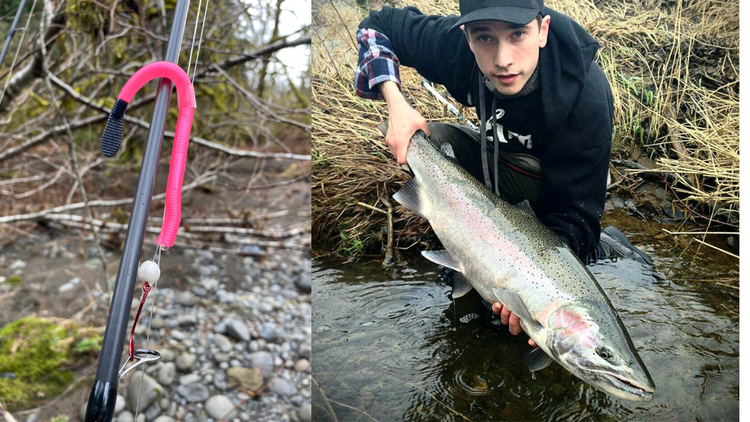
Steelhead fishing lures, baits & techniques have evolved, traveled, revisited and re-evolved year by year. The base concepts are often the same.
Steelhead like very specific colors, certain shapes and are very curious about subtle movement when presented properly.
From some of the classics, okie-drifters, corkies, yarn-balls (yarnies) to the revolution in jigs, beads and plastic worms, a Steelhead will bite several different lures when the time is right.
Although Steelhead are a Trout, and there is cross-over, something about the migration, size and holding water of Steelhead makes them key in on specifics, while resident Trout may look for more natural, buggy presentations.
Don’t get it twisted, there are days where the Trout won’t stay off your beads, jigs or plastic worms, but targeting Steelhead with certain baits can actually be ultra specific to the species.
 The Trout that do bite Steelhead worms are often quality fish!
Have Coho Salmon around that won't stop crushing your eggs? Spoons keep hooking Chinook Salmon and Trout? Sometimes it's a good problem to have, but the plastic worm can be selective, and deadly.
The Pink Worm
When plastic worms became popular, the color pink was so prevalent, that non-pink plastic worms can still be referred to as “Pink worms.”

Take for instance an angler saying “Got it on a pink worm, Nightmare pattern with pearl white head.” It may be confusing as nothing on that lure is pink, but it's a common name of soft-plastic worms that are fished for Steelhead.
“What's this bass lure? my Dad remarked while wading into the river. He’d caught plenty of Steelhead on eggs, corkie and yarn…but nothing on a plastic worm.
It wasn’t 3 casts until that float sunk and the “bass lure” became a trustworthy option. There’s something special about the way that Winter Steelhead (and Summers…) attack them and leave no doubt, often sinking the float out of sight.
Low Water & Hatchery Friendly Worms
The Coastal and Wild Steelhead anglers often fish large and very visible worms for Steelhead.
Whether trimming a 6-inch down or fishing the full 6 inches, that large presentation flat out works, but when it comes to low-water angling or Hatchery fish, they leave them in the tackle box. Granted - even those long pink worms can get it done, and sometimes when nothing else is working its worth throwing a gaudy plastic.
Yet, there is a few plastic options that can produce serious numbers of hatchery fish, low-water Wild Steelhead or even Coastal Cutthroat.
3-4 Inch “Midwest Special” or Mini Worms
The NUMBER One plastic I float fish in low, clear water for Steelhead and Cutthroat is the nightmare worm in 3 or 4 inches. Red and black, or the reverse nightmare (red and white) either on a black jig-head, or pearl white jig-head. ⅛ oz works just fine, but I’ve come to find 1/16 and even 1/32oz highly effective because of the slower, less-invasive fall rate.
 Christmas Day 2025 - Solo bank trip in the afternoon produced an absolutely brutal wild Steelhead in fast water. It sank the float biting a pink with white tail Addicted Steelhead worm.
In faster riffles of course, better to go heavier, but in areas where the Steelhead are not sitting the head of the run, that lighter jig-head and smaller worm is just enough to get them interested, and not too much to look out of place.
I’ve had upper-teens Steelhead absolutely smash the red worms in smaller sizes, while 12-15 inch Cutthroat can’t seem to leave it alone either.
 Andrew Schnell, a worm-fanatic, with a quality Buck Steelhead from the Oregon Coast.
Micro Worms
Next up is what are referred to as “Micro-worms” which are much smaller in diameter, bringing them into the Panfish arena as excellent baits for Perch, Crappie and Bluegill. Will they catch larger fish? Absolutely.

The common bead rig with gap between hook is one of my favorite places to use them-I will thread a 3rd of the micro worm onto the hook so it looks like a small worm or leach chasing an egg downriver. I've caught fresh Winters doing this, and more often than not, the bead wasn't even pulled either direction, which makes me think they went for the micro worm.
I would more often rely on larger worms for the aggressive bite, but micro worms fished in higher pressure or slower pools? They can shine there - and ideally on just a hook with shot pattern, or a small jig head.
One thing to consider - because they are smaller profile, Rainbows and Cutthroat can go nuts for them, so if you're catching too many Trout and know Steelhead are present, you may want to upsize again.
Check out Micro-Worm color options here
 Marlin Lefever with a large buck caught on the Sloppy Smith
Float Factors with Steelhead Worms
Under a float, whether slip or fixed, is such an excellent way to fish Steelhead worms in most flows.
Highly important and overlooked, your float size and total weight matters because of two factors - stealth and speed of drift. Stealth meaning the sound and splash of the bobber hitting the water while casting.
That can be a major factor when fishing low flows or high pressure fisheries, and where fixed floats can make all the difference.
In higher flows and medium-large rivers though, it may not be a factor at all.
Slip floats with inline weights provide casting distance and more stability during mends, but they also can slow down your drift in a way you'd hardly notice…but where Steelhead definitely notice.
 Photo above: Marlin and I had never fished this river before, yet Marlin's first cast into it with a worm produced a nice buck, shortly after a beautiful fresh hen, and then I caught this freight-train on a plastic worm. The worm is a Coastal and lower Columbia favorite!
1/2oz is common and catches loads of fish, but something anglers should try more is using a heavier float setup, even 1oz.
This can slow the worm down just enough where it's an even easier meal for a large, energy conserving fish - especially during a cold front. On the flip side-another way to stand out and make a difference is to go lighter on float and jig head.
Sometimes you may find two holes may work best with one or the other, or it won't matter. Another case of heavier float and 1/4oz jig head being an advantage is in the head of faster riffles and holes…or on the seam of fast water. That weight will hang your worm longer, not blow out of strike zone as fast, and that can be where big bucks may sit.
 Another Sloppy Smith double stripe buck.
 A pretty wild B-Run Summer caught by Richard Stein
Advantages of Drifting and Dogging Worms
Steelhead worms have a pretty major presence under water, and likely never more-so than when rigged to drift while a weight slows it down and keeps it in the strike zone.

Usually accompanied with a corky or similar floating lure, this brings maximum movement and puts the worm to work antagonizing fish holding near bottom. In areas where a floated worm moves too quickly, or the bottom has a varied depth, it is known to outfish the horizontal suspended presentation.
Also it gives the most similar look to a lamprey which does occupy many Steelhead rivers, and creates the most movement in the worm.
Again weight contributes to the speed of worm moving downriver, with varying results dependent on the water speed and fish behavior. For more simple drift rigs and light bobber dogging, mini and micro worms can be a quick addition to a bead or corky rig, by threading on the hook - but optimal hookup results involve a threaded worm setup.
 Peach with White Tail
Steelhead Worm Color Selection
Colors of worms are all over the map these days, but for Steelhead- Pink, Red or somewhere in between seems most consistent on PNW rivers. If I could only have 3, it would be Bubblegum Pink with white tail (“The Ghost), Red with white Tail (“Reverse Nightmare” or “Red Fever”) or Red with black tail (“The Brooks”)
These specific worms I've caught standard to trophy sized Steelhead on rivers all over Oregon and Washington. Sloppy Smith is pink with blue tail, and as you'll see in this article, it's another heavy hitter!
 Richard Stein sent in his worm lineup for this winter - all of them will fish...and catch.
There's a few colors that may not be as consistent across the board but on certain rivers they are top of the heap.
For instance - chartreuse tail pink worm is one where I've seen incredible results, especially on a few specific Washington rivers. Black with chartreuse tail is one that anglers swear by in certain systems.
I've even seen some strange colors pay off, all worth trying. For the angler who's still getting used to the idea of worm fishing - pink and red…white or black tail…consistent as a nightmare jig.
Other brands have some deadly options, and i've had success with most of them. Even those I haven't tried, I'm sure most work, but the Addicted worms have yet to let me down in comparison to anglers fishing other brands on same fisheries. I'm still open to any worm out there, but the colors and especially the durability, is a strong combination.
Jig Head Sizes for Steelhead Fishing
Strength of hook, size of hook and durability of paint matters here. Sure, i've done pretty well on cheaper heads but the last thing you want to happen on a lifetime fish is a hook to bend out.
Look for quality hooks and often larger sizes when targeting big fish and if the eye has paint make sure you do a palomar knot - Don't ask me how I know…20+ Steelhead pulled that knot out just before netting…ouch.
Jig head weights matter as well, punch down fast with a ¼, most float fish with ⅛, and 1/16 or 1/32 is my favorite when running a bead trailer as it can bounce in the tailout without snagging as much-fishing farther back in the run. Durable paint processes make a difference in retaining color much longer.
 Colors…white and black are consistent, but contrasting with pink, peach, blue or chartreuse is such a great way to provide a target and set your worm apart.
Ready for Steelhead?
Most of all, go fish them.
Not only worms, there's days jigs, beads or spoons will catch more, but don't get caught without them if it's a worm day…and there's a lot of worm days!

Browse Addicted Fishing Steelhead Worm Collection
- written by Lucas Holmgren